Our Location
5th Floor, Huake Center, Lanshan District, Linyi City, Shandong Province, China

5th Floor, Huake Center, Lanshan District, Linyi City, Shandong Province, China

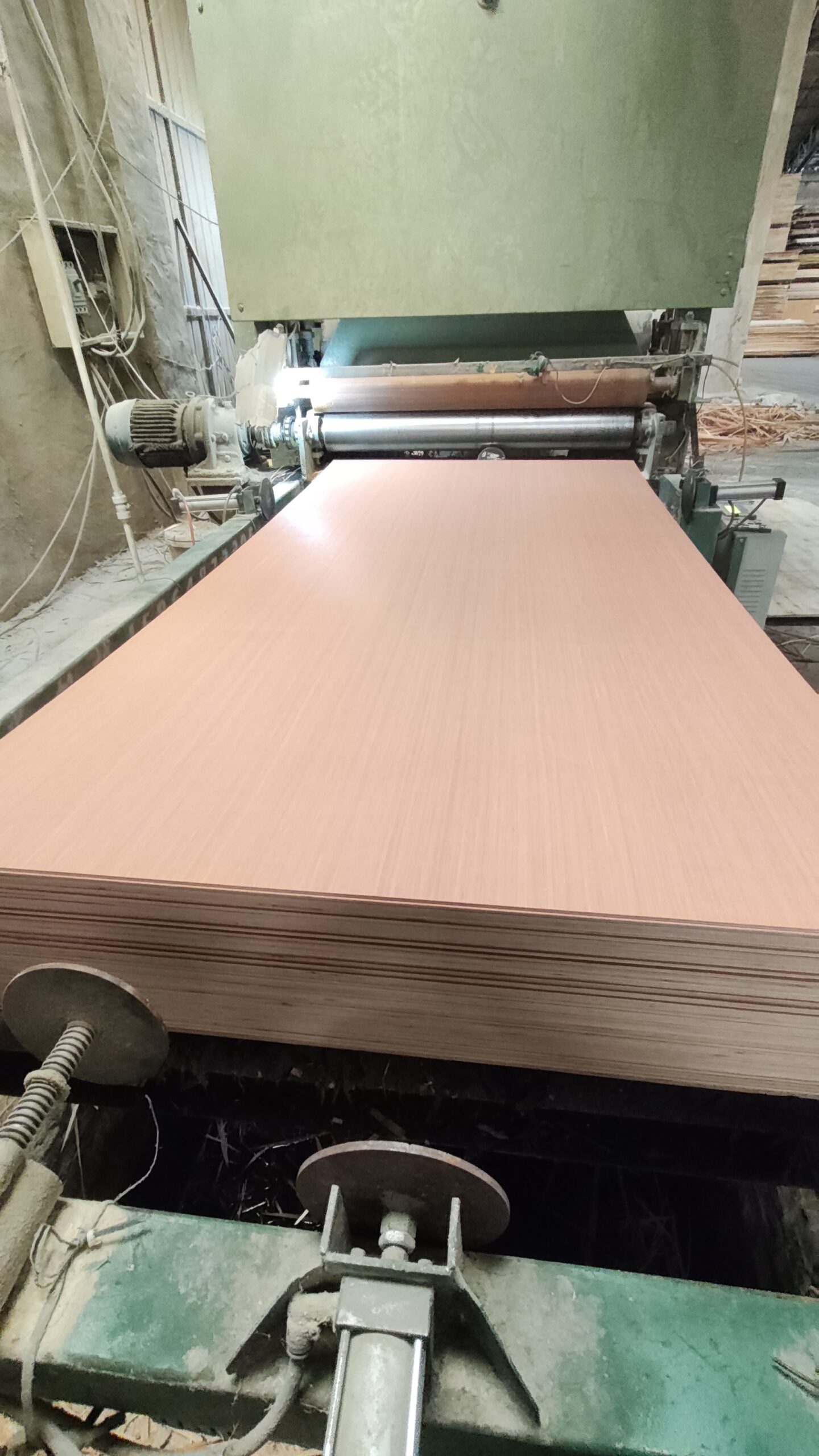
E grade plywood draws attention because the letter appears on panel stamps and in product descriptions, yet buyers often misread what it measures. In panel labeling, the E usually tracks formaldehyde emissions, most commonly as E1 or E2, not a strength or appearance class. This guide explains what an e grade plywood label means, which grade fits which project, and how to confirm the requirement before the order ships.
Formaldehyde grades compare how much of the chemical a finished panel releases into the air. E1 marks low-emission panels widely accepted indoors, E2 marks higher-emission panels restricted in living areas, and some markets add E0 and E0.5 for very low emissions. The class sits on the certificate and often prints on the panel stamp.
The E on a plywood label names the formaldehyde emission class from a standard test, not the wood quality. The test measures formaldehyde released per unit of board area over a set time, and the result maps onto the E classes used by the producing country. Buyers who treat E as a strength grade order the wrong product, because a high-strength panel can still carry a poor emission class.
E1 panels release roughly a third of the E2 level and suit most indoor uses, while E2 panels carry higher emissions and face restrictions on interiors. Markets such as Japan and some EU countries push toward E0 and E0.5 for bedrooms and schools. The requirement usually comes from the building code or the project specification, so the buyer confirms it before comparing prices.
| Class | Emission profile | Common use |
|---|---|---|
| E0 / E0.5 | Very low | Bedrooms, schools, strict interiors |
| E1 | Low | Standard indoor furniture and fit-out |
| E2 | Higher | Restricted to ventilated or non-living areas |
The face grade (A, B, C, D) and the E class describe different properties. A clean A-face panel with an E1 bond fits furniture, while a C-face structural panel can also carry E1. Confusing the two letters leads buyers to reject a perfectly good structural panel for the wrong reason.
Indoor air limits drive the choice between E1 and higher classes. Furniture, wardrobes, fitted shelving, and full-height paneling sit inside the living space, so the emission class influences the air people breathe. Schools, hospitals, and hotels often set the strictest limits, and their specifications spill over into the whole interior fit-out.
Sequestered spaces with limited air movement hold onto formaldehyde, so low-emission panels matter most there. A well-ventilated workroom tolerates a higher class than a sealed bedroom. The practical rule stays simple: use E1 or lower for anywhere people sleep or spend long hours, and reserve higher classes for ventilated workshops and non-living zones.
The panel stamp helps, but the certificate names the test standard, the emission value, and the batch. Import orders should request the third-party emission report before production, because a certificate issued for one line does not cover another. The buyer files both the report and the batch number with the project record. On larger jobs, a second spot sample drawn at delivery confirms the shipped lot, and that sample travels with the handover record.
Swapping the glue system, the face veneer, or the core density can shift the emission number even within one product line. When a supplier proposes an alternate core for cost, the buyer asks for a fresh test on the revised construction rather than carries over the old certificate. A revised spec deserves a revised report, and the paper trail protects both sides at the end of the contract.
The class comes from a chamber test that measures formaldehyde released from a panel sample under fixed temperature and humidity. The result appears as a number in milligrams per cubic meter or per meter of board area, and the producer maps that number onto the E classes. The chamber conditions are standard, so a certificate from one laboratory compares with one from another on the same method.
European EN 717-1 runs a test in a climate chamber over weeks, while the perforator and desiccator methods measure faster in the lab. Each method covers different products and markets, so the certificate names the method alongside the value. Buyers accept the certificate when it names a recognized standard and the produced number.
The adhesive line between veneers is the main emission source. Urea-formaldehyde glues release most, melamine-urea glues release less, and isocyanate or casein systems drop further. Factories tune the glue to the ordered class, and the emission certificate reflects that exact glue recipe for that batch.
Emission class and core choice arrive as two independent lines on the order. A poplar-core panel and a birch-core panel can both carry E1, while the same two cores can also ship as E2. The buyer fixes the emission class for the air quality, then picks the core for strength, weight, and price. The two decisions never blend into one specification field.
The frequent error reads a high face grade as proof of low emissions, or assumes a heavy core implies an interior-safe panel. Neither follows. The certificate carries the emission fact, and the stamp carries the grade fact, so the buyer reads both lines before the order leaves. A clean order states both the E class and the structural spec on the same contract page.
The adhesive between veneers sets the emission number. Urea-formaldehyde glues release more than melamine-urea or isocyanate systems, and the factory picks the system to meet the ordered class. A lower-emission glue raises cost slightly, so the class and the price move together.
Writing the order means stating both the emission class and the structural spec on one line. A clear line reads E1, 12 mm, A/B face, poplar core, interior bond, 2440 x 1220 mm, and the quantity follows. Suppliers quote exactly that line, and the inspection checks every field on the certificate.
Send the emission requirement to the supplier in writing and ask for the report before the deposit. For container orders, include a pre-shipment inspection sample that carries the class mark. A panel that fails the air test after install costs far more than the certificate would have at order time.
Different countries label emissions differently: EN 13986 governs much of Europe, CARB TSCA Title VI governs California, and Japan uses F stars. A buyer exporting panels converts the destination standard, because printing E1 into a market that asks for F creates a specification mismatch. The mill clarifies the applicable standard before quoting.
Some project specifications go further than the class name and state a numeric limit in milligrams per cubic meter or a desiccator value. Translating that number onto an E class needs the test method paired with it, so the buyer confirms the unit the document uses. A certificate that shows both the number and the standard removes the guesswork at the approval stage.
Specifiers ask the same questions about e grade plywood repeatedly, so here are the answers that settle the decision.
The E marks the formaldehyde emission class from a test, with E1 as the common low-emission indoor grade. It does not measure strength or appearance.
Yes for standard living spaces. E1 panels satisfy most indoor requirements and the building codes of most markets, with stricter classes used for bedrooms and schools.
E0 emits less formaldehyde than E1, typically around half or less, and appears where the specification demands near-zero emissions. The choice usually follows a project limit rather than a wide preference.
No. Face grade and emission class are separate claims. A clean A-grade face can still carry E2, so confirm the emission class on the certificate regardless of the face.
Generally yes. The emission class depends on the glue system across the veneers, and factories run E1 across the common thickness range from 3 mm to 25 mm.
Reading an e grade plywood label correctly separates air quality from wood quality and puts the right panel in the right room. Fix the emission class from the project, then match the core and face to the build. For interior orders, a manufacturer such as HYY supplies Melamine Plywood and Commercial Plywood with the emission certificate on the batch, which helps furniture buyers meet indoor air limits the first time.