Our Location
5th Floor, Huake Center, Lanshan District, Linyi City, Shandong Province, China

5th Floor, Huake Center, Lanshan District, Linyi City, Shandong Province, China

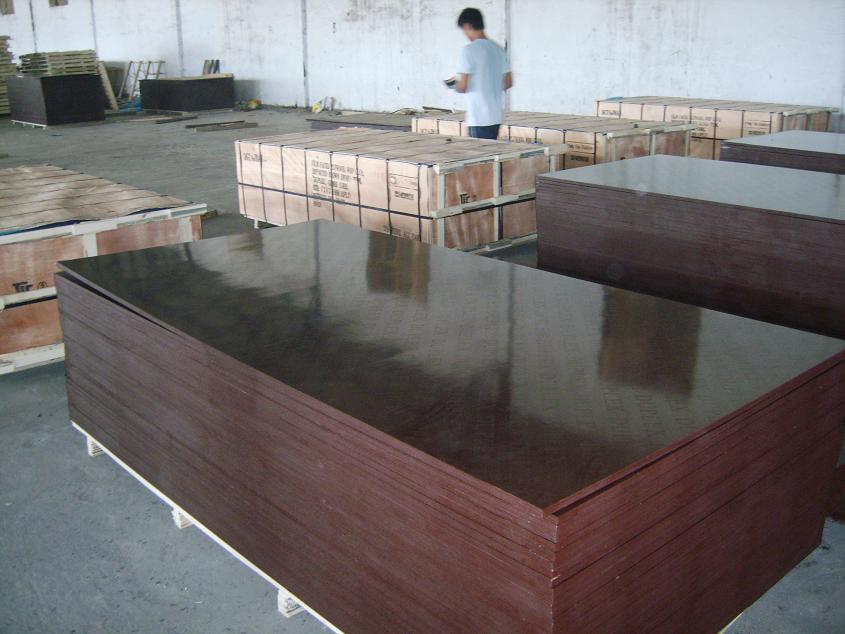
Hexa marine film faced plywood is a concrete-formwork panel branded under the Hexa name with a marine-grade waterproof bond and a film face that releases concrete cleanly. Hexa marine film faced plywood suits repeated pours in wet or marine environments, and the coated face survives several cycles if cleaned and stored flat. This guide explains Hexa marine film faced plywood, what the marine bond means, the grades and thicknesses it comes in, and how to buy and install the panel.
A formwork sheet that releases concrete cleanly and survives repeated pours in wet conditions earns its price, and the Hexa marine film face is built for that duty.
Hexa marine film faced plywood refers to a panel coated with a film face under the Hexa brand, built with a marine-grade waterproof bond for concrete formwork.
The film bonds to the face under heat and pressure, and the coating releases concrete cleanly and protects the core from water and abrasion. The film adds cost and reuses across pours.
The panel uses a boiling water proof adhesive that survives immersion and steam, so the bond line does not soften when the panel gets wet. The glue is the core of the marine rating.
The core uses hardwood or softwood veneers chosen for strength and stability, with a dense build that resists crushing under wet concrete. The core carries the pressure.
A Hexa marine film-faced sheet survives several pours if cleaned and stored flat, and the count depends on the film type and the care taken. The reuse lowers the cost per pour.
| Feature | Hexa marine sheet | Standard sheet |
|---|---|---|
| Film | Phenolic or melamine | Phenolic or melamine |
| Bond | Boiling water proof | Exterior |
| Core | Hardwood or softwood | Softwood |
| Reuse count | Higher | Lower |
The market groups formwork sheets by film type, bond class, and thickness, and the buyer matches each sheet to the duty.
Phenolic film suits the heaviest duty and the most pours, while melamine film suits lighter duty and fewer pours. The film type sets the reuse count.
Formwork sheets run from 12 millimetres to 25 millimetres, and each step adds material cost and stiffness. A thicker sheet survives more pours.
The common sheet measures 1220 by 2440 millimetres, or 4 by 8 feet, and the standard size covers most column and slab forms. The size suits the formwork grid.
Boiling water proof glue suits wet concrete and marine duty, and the higher class resists water and delamination. The exposure sets the requirement.
The panel serves concrete formwork in wet or marine environments, and the marine bond earns its place on a busy site.
Hexa marine sheets form columns and beams where wet concrete presses against the face for hours, and the coated face releases cleanly. The panel holds its shape.
Slab and foundation forms use Hexa marine sheets that carry the concrete weight without bowing. The stiff panel keeps the concrete flat.
A Hexa marine sheet survives several pours if cleaned and stored flat, and the buyer counts cycles rather than buying once. The reuse lowers the cost per pour.
Sites near water or in high humidity benefit from the marine bond, because the panel resists swelling and the film stays intact. The duty justifies the price.
The counter visit works best when the buyer knows the film type, the bond class, and the reuse count before asking the price.
The edge stamp names the species, the film type, the bond class, and the thickness, so the buyer reads it before paying. A missing stamp means an unknown sheet.
The buyer inspects the film for tears, bubbles, and uneven coverage, because a damaged film lets concrete stick and the sheet loses its reuse value. The coating protects the panel.
The price follows the film type and the thickness, and delivery and cutting add to the total, so a distant yard with a low tag can end up costing more once freight is added.
The buyer checks the face for voids and patches, the edge for a solid core, and the corner for squareness, swapping a bad panel at the rack. The inspection saves a return trip.
A formwork sheet performs only when it is fixed and cleaned correctly, and the builder follows the reuse duty.
Every cut edge exposes the core, so sealing or taping it keeps moisture out and keeps the panel strong. The seal guards the bond.
A release agent on the film face helps the concrete release cleanly, and the builder applies it before each pour. The agent extends the film life.
The builder cleans the face and edges after each pour, so the panel stays flat and the film stays intact. The cleaning extends the reuse count.
Sheets store flat on even supports off the ground under cover, so the panel stays flat and dry between pours. A leaning sheet can twist.
A few slips cost more than a higher sheet price, and avoiding them keeps the project on budget.
The Hexa name marks the film, but the stamp names the grade, the bond class, and the thickness. The buyer reads the stamp before trusting the name.
A marine bond resists water better than an exterior bond, so the buyer matches the glue class to the wet duty. The exposure sets the requirement.
A sheet with a voided core or a damaged film fails after it is fixed, so the buyer checks the face, the edge, and the stamp before paying.
A sheet that sits badly can warp or stain before it reaches the job.
Sheets store flat on even supports off the ground under cover, so the panel stays flat until it reaches the job site.
Even an exterior-bonded sheet loses strength if it sits soaked for weeks, so the buyer keeps every stack under cover.
A buyer checks these points before loading a coated sheet.
The buyer reads the species, film type, bond class, and thickness on the edge stamp.
The buyer inspects the film for tears, bubbles, and uneven coverage before paying.
The buyer inspects the edge for voids, splits, and swelling before paying.
The buyer adds delivery, cutting, and edge banding to the sheet price before deciding.
The buyer also checks the film for tears, bubbles, and uneven coverage before paying, because a damaged film lets concrete stick.
A Hexa marine film faced sheet that releases concrete cleanly and survives repeated pours earns its price on a busy site.
A buyer matches the sheet to the job, and these cases show the match.
A column form uses a Hexa marine film faced sheet that releases cleanly and survives several pours. The coated face protects the panel, and the builder cleans it between pours.
A slab form uses a Hexa marine film faced sheet that carries the concrete weight without bowing. The stiff panel keeps the concrete flat.
A shed or site hoarding uses a Hexa marine film faced sheet sealed against rain and damp. The exterior glue resists the weather.
It is a concrete-formwork panel coated with a film face under the Hexa brand, built with a marine-grade waterproof bond for wet and marine duty.
The marine bond resists water and the film face releases concrete cleanly, so the panel survives several pours in wet conditions if cleaned and stored flat.
A Hexa marine film-faced sheet can survive several pours depending on the film type and the care taken, and the count is higher than a standard sheet.
Twelve to twenty-five millimetres suits most formwork, and the depth follows the concrete pressure and the span.
Read the stamp for species, film type, bond class, and thickness, check the film for intactness, inspect the edge for voids, and compare delivered cost.
Hexa marine film faced plywood releases concrete cleanly and protects the core across repeated pours in wet conditions, and the marine bond earns its place on a busy site. Read the stamp, match the film type to the duty, and clean and store the panel between pours. For formwork panels with clean faces, dependable cores, and consistent thickness, a manufacturer such as HYY supplies Commercial Plywood and Film Faced Plywood in standard grades.