Our Location
5th Floor, Huake Center, Lanshan District, Linyi City, Shandong Province, China

5th Floor, Huake Center, Lanshan District, Linyi City, Shandong Province, China

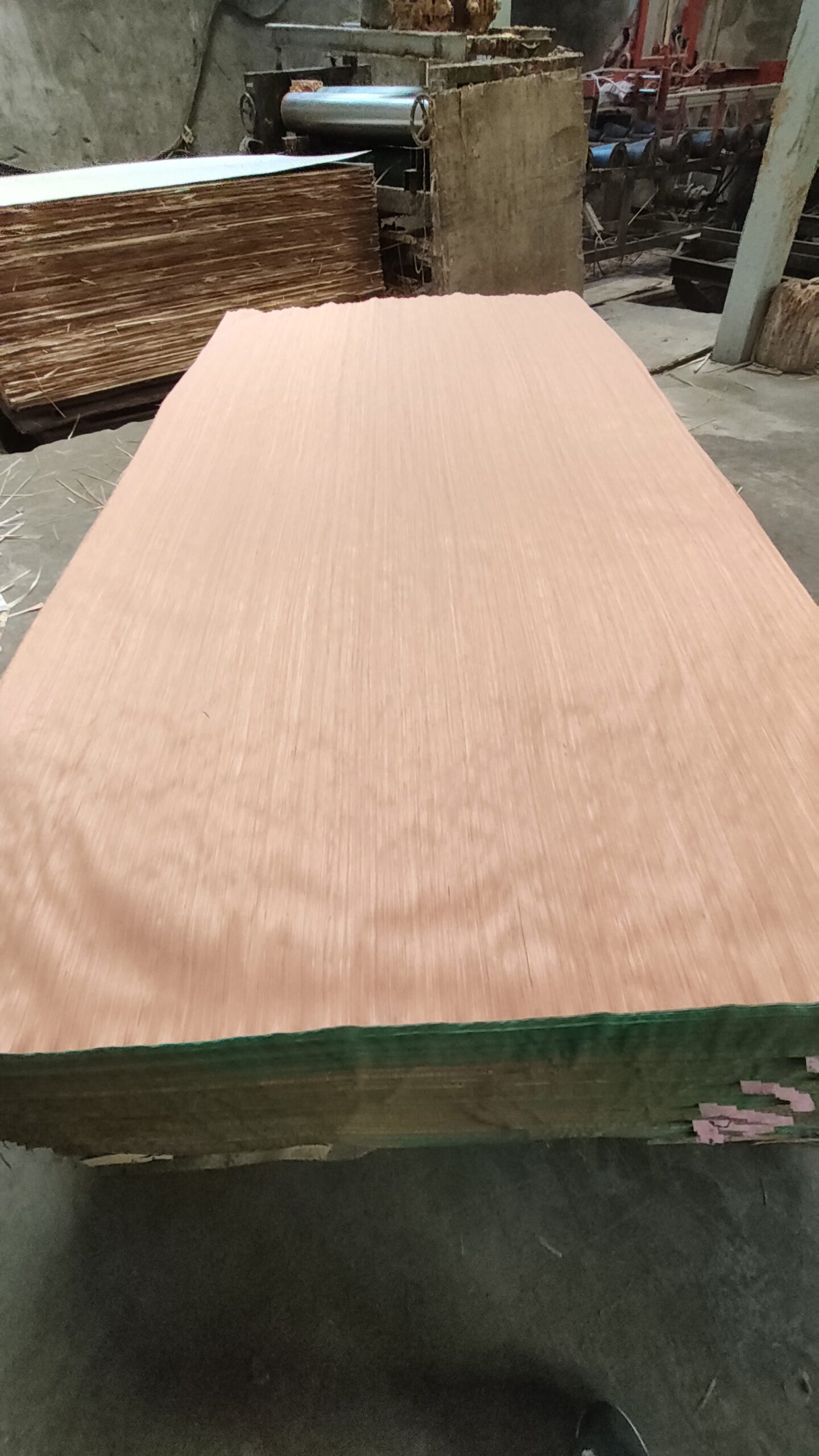
How is plywood cut is a question with two answers, and buyers want both. In the mill, a peeling lathe cuts the whole log into a spiral veneer ribbon before the panel is laid up and pressed. On site, a plywood panel is cut with the same saws that handle other wood-engineered boards, and the choice of saw, speed, and support decides the edge quality. This guide covers the manufacturing cut, then the workshop cuts that turn a 2440 x 1220 mm sheet into finished parts without chipping the face.
The word cut means something different at each end of the supply chain. The mill cut produces the veneers that become the panel, and the fabricator cut produces the panels the customer installs. Both matter to the final product, and both are worth understanding before a single sheet is ordered.
The first cut in plywood’s life happens not with a saw but with a fixed blade peeling a spinning log. This rotary peeling method turns the whole log into a long, continuous veneer ribbon, which is why plywood faces can exceed the width of any natural board.
The conditioned log mounts on a lathe and rotates against a blade set to trim a thin layer along its full length. Each rotation removes one complete wrap of veneer, and a clean, even ribbon signals a sharp blade and controlled feed speed. Rotary peeling wastes little of the log and gives the panel those wide, seamless faces.
The lathe setting controls veneer thickness from under a millimeter to several millimeters, and that figure shapes the final panel. Thin veneers build light, flexible panels; thicker veneers build strong, rigid ones. The layup schedule on the certificate reflects the veneer count chosen for the grade.
| Veneer thickness | Panel character | Typical use |
|---|---|---|
| Under 1 mm | Light, flexible | Thin furniture panels |
| 1-2 mm | Balanced, standard | Most commercial plywood |
| Over 2 mm | Rigid, heavy | Structural and formwork |
Slicing cuts the log flat as veneer for decorative faces, and sawing produces natural-edge boards used in specialist work, neither common in commodity plywood. Rotary peeling dominates because it uses the log efficiently and produces wide, knot-limited faces. Buyers see the method only through its result: smooth faces and efficient pricing.
After the press, the mill trims the panel square and cuts it into the standard sheet sizes the market expects. The default panel at 2440 x 1220 mm comes from trimming a larger pressed sheet, and ripping and crosscutting produce the smaller stock sizes.
A finish saw trims the pressed panel to square edges, and the trim waste is small because the panel is pressed close to size. Square corners and clean, straight edges come out of this pass, and edge quality here previews the core quality inside. A buyer running a hand along the trimmed edge reads the core construction directly.
Full sheets get ripped along the grain and crosscut across it to create the smaller panels shops keep in stock. Each saw pass through the solid panel risks face tear-out on the underside, which is why production lines use scoring saws or clean blades. The edge finish and the dimension tolerance at this stage set the quality the fabricator inherits.
On site and in the shop, cutting a panel well is mostly a matter of choice of saw and support. A panel saw, a table saw, or a guided circular saw each cuts plywood cleanly when set up for a non-ferrous, veneered material that chips easily on the unsupported face.
A panel saw gives the cleanest factory-like edges, while a track-guided circular saw cuts large sheets accurately on site. A table saw works for ripping narrower pieces, and a jigsaw handles curves and cutouts with a fine-tooth blade. The blade matters more than the machine: fine teeth and a sharp edge prevent chip-out.
| Saw | Best job | Notes |
|---|---|---|
| Panel saw | Full-sheet breaking | Scoring blade stops chipping |
| Track circular saw | On-site straight cuts | Good support, steady feed |
| Table saw | Repeat rip cuts | Sacrificial fence prevents dross |
| Jigsaw | Curves and cutouts | Fine-tooth blade, face down |
Plywood chips at the side where the blade exits the face, so the clean side faces up with a circular saw and face-down on a table saw where the blade exits from above. Tape along the cut line and a scoring pass further reduce chip-out on painted faces. Support at the cut line stops the panel from bending out of square.
A sheet must sit flat and be supported on both sides of the blade so it does not drop and bind mid-cut. Setting the panel on two saw horses with the cut line clear lets the sheet stay true and prevents pinch. Measuring and marking from the same corner to both ends keeps repeated cuts parallel and square.
Beyond straight cuts, panels meet cutouts, curves, and clean interior edges for fittings. The cutting method shifts with the shape: a router gives a finished edge on cutouts, a holesaw produces clean ports, and a fine jigsaw follows marked curves.
A carbide-tipped blade with a high tooth count leaves the cleanest veneer edge, while a coarse combination blade tears the face finish. The blade tip sharpness matters as much as the tooth count, because a dull tip burns and chip-out the face even on a fine blade. Shops that cut plywood daily keep a dedicated panel blade set aside for sheet work.
Steady, controlled feed produces clean edges, while pushing hard through the sheet causes the blade to wander and the face to splinter. Making the cut in a single continuous pass keeps the sheet-square cut true, and letting the blade do the work keeps heat down. The operator’s feed discipline shows up directly in the edge finish.
Plywood edges take screws near the face reasonably, but edge screws into the end grain of the plies have less holding power than face screws into the flat panel. A pilot hole and a proper sheet-metal-to-wood screw improve edge grip, and edge caps and battens carry heavier loads. Fabricators account for edge holding in the joint design rather than over-driving thin edges.
Beyond straight cuts, panels meet cutouts, curves, and clean interior edges for fittings. The cutting method shifts with the shape: a router gives a finished edge on cutouts, a holesaw produces clean ports, and a fine jigsaw follows marked curves.
Template routing trims cutouts to a clean, finished edge in one pass, and a straight bit cut with a guide gives a square edge for panels and inserts. Routed edges look machined rather than sawn, which suits visible work and edges that will be edge-banded. The router also trims laminate and veneer overlays back to a sharp line.
Sawn edges benefit from a light sanding and seal; cut plywood edges wick moisture unless sealed in damp service. Edge banding and veneer tape hide the core on visible work, while a paint-on edge sealer protects the plies in wet rooms. The post-cut treatment restores the panel’s moisture defense at the vulnerable face.
Fabricators ask the same plywood cutting questions, and these answers cover the ones that come up most often.
A panel saw gives factory-clean edges; a track-guided circular saw cuts large sheets accurately on site; a table saw rips narrower pieces cleanly. A fine, sharp blade is more important than the machine.
Point the clean face away from the blade exit, tape the cut line, and where possible use a scoring blade. Supporting the sheet on both sides of the cut also keeps the edge clean.
Yes, with a fine-tooth blade for curves and cutouts. Keep the panel well supported and the clean face down so the blade exit tears only the hidden side.
A rotary peeling lathe spins the log against a fixed blade, removing thin layers as a continuous veneer ribbon. That ribbon is then dried, graded, cross-laminated, and pressed into panels.
In dry rooms no, but in damp service every cut edge should be sealed or banded because bare plywood edges wick moisture faster than the faces. Edge protection restores the panel’s moisture defense.
How plywood is cut runs from the mill’s rotary peeling of a log into veneer to the workshop’s saws that turn a full sheet into finished parts. At both ends, the cut quality shows in the edge. For panels that cut well and stay true to size, a manufacturer such as HYY supplies Commercial Plywood and Chip Board in standard sheets ready for the table, track, and panel saws.