Our Location
5th Floor, Huake Center, Lanshan District, Linyi City, Shandong Province, China

5th Floor, Huake Center, Lanshan District, Linyi City, Shandong Province, China

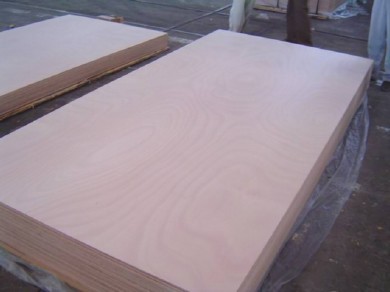
K plywood 21 mm names a thick structural panel from the K series, a heavy-gauge stock that buyers order for load-bearing shelves, worktops, staging, and heavy framing where an 18 mm sheet flexes too much. The 21 mm panel carries nearly the same footprint as the standard 2440 x 1220 mm sheet but adds thickness, stiffness, and edge strength. This guide explains what the K label means, how a 21 mm panel behaves, where it earns the premium, and how to confirm the batch before it ships.
The K in K plywood usually refers to a kiln-dried or kraft-faced series from an exporter’s catalog, and the 21 mm figure is the nominal thickness. The panel keeps the same cross-laminated construction as thinner stock, just with more veneers in the stack, and that extra body changes how it flexes, how it grips a screw, and how it prices.
The K prefix has no universal dictionary, but in most export catalogs it stands for a kiln-dried construction stock with a consistent, flat, void-resistant core. The 21 mm figure is the nominal thickness after sanding, and it sits above the common 18 mm and below specialist 25 mm structural boards.
A K series panel carries the grade and bond on the certificate, so the buyer reads the full line rather than trusting the single letter. K panels commonly pair a B or C face with a reliable core and an exterior-capable bond. The face grade decides the visible finish, and the bond decides where the panel may live.
The 21 mm sheet falls between the 18 mm all-rounder and the 25 mm heavy structural board, which makes it a specialist figure rather than a standard shelf size. It spans the gap for jobs that need noticeably more stiffness than 18 mm but do not need the weight and price of 25 mm. The buyer orders it when the deflection calculation says 18 mm is marginal.
| Thickness | Stiffness character | Typical use |
|---|---|---|
| 18 mm | Standard all-round | Furniture, general shelving |
| 21 mm | Stiffened span | Heavy shelves, staging boards |
| 25 mm | Structural heavy | Framing, worktops, plant boards |
The extra 3 mm more than triples nothing subtle: it adds bending stiffness, edge screw-holding, and a heavier sheet weight that changes handling. The stiffness gain follows the cube of the thickness, so the 21 mm panel flexes noticeably less than 18 mm under the same load.
Because bending stiffness scales with the cube of thickness, the move from 18 mm to 21 mm brings roughly a 40 percent stiffness jump at the same base material. Shelves that sag at 18 mm span cleanly at 21 mm, and staging boards take a heavier person without noticeable flex. The designer checks the deflection table rather than guessing by eye.
Thicker panels give edge screws more end-grain to bite into, so 21 mm edges hold fittings better than 18 mm. Joinery that runs into the edge, such as routed joints and mitered corners, also gains surface area for glue. The extra thickness turns a marginal edge joint into a confident mechanical connection.
The thick sheet weighs more for the same footprint, so freight and the installer’s lift both rise. A 21 mm panel adds roughly a kilogram per sheet against 18 mm reference stock, and the difference compounds across a pallet. Buyers weigh the stiffness gained against the handling and freight added for the same footprint.
The price step over 18 mm pays off where the design genuinely needs the stiffness: heavy shelving, work surfaces, staging and access boards, and structural wall and racking panels. In each role the thicker sheet removes a support point, a sag line, or a deflection complaint.
Industrial shelving carrying tools, stock, and archive boxes benefits from the 21 mm figure because it spans further between brackets without sagging. Warehouse racking panels and heavy retail shelving use the thick board for flat, long-lasting shelves. Fabricators save on supports and battens while the shelf stays flat.
Site staging and access boards see concentrated load from feet, ladders, and material stacks, and the 21 mm panel takes that duty with less flex. The thicker board also makes a more stable climbing platform than thin stock. Users check the deflection rating on the panel before trusting it under foot.
Workshop worktops, benchtops, and router tables use 21 mm plywood for a flat, rigid top that resists the push of hand tools. The panel stays where the user sets it instead of flexing under clamp pressure. Fabricators edge-cap the thick panel and get a work surface that holds its geometry for years.
The thick sheet cuts, routes, and finishes like other plywood, but the extra body asks for slightly different handling and joinery. Blades cut the extra 3 mm without drama, and routers handle the thickness the same way. The fabricator adapts edge treatment and fastening to the heavier board.
Standard panel blades, track saws, and routers handle 21 mm without issue, and the thick edge finishes clean when the blade is sharp. Cut edges should be sealed in damp service exactly as on thinner stock. The heavier sheet needs good support at the cut line so it does not drop and bind mid-cut.
The 21 mm edge gives room for routed rebates, mitered corners, and edge caps that would cut too deep into 18 mm. Screws into the edge hold more firmly, and block joints gain glue area. The thick edge also carries edge banding and lipping without the joint overpowering the panel.
The extra weight changes the lift, and two people or a panel trolley handle a long run of 21 mm better than one. Twisting a thick sheet risks less than a thin one, but size and weight still call for care through doorways and on stair lifts. The handling routine adjusts to the heavier panel rather than assuming the old habits.
A K label and a thickness figure never tell the whole story, so the buyer locks the rest on the certificate: face grade, core quality, bond, and the standard the panel meets. The certificate is what turns a catalog abbreviation into a real, traceable panel.
The trimmed edge exposes the core, and a dense, void-free edge signals a well-built 21 mm panel. Honeycomb or gap-ridden edges mean the core will fail at routers and screw points even though the faces look clean. A quick inspection along the edge of a sample tells the buyer whether the thickness is real quality or just layers.
Nominal 21 mm measures closely after sanding, and the certificate lists the tolerance band. A cheap panel can press thin at the edges while reading 21 mm in the middle, which defeats the stiffness gain. Measuring at several points on a sample checks that the figure is real across the sheet.
Buyers ask the same questions about thick K plywood, and these answers cover the decisions that come up most often.
Yes. Bending stiffness scales with the cube of thickness, so 21 mm flexes noticeably less than 18 mm under the same load, roughly a 40 percent stiffness gain at the same base material.
In most export catalogs the K marks a kiln-dried, consistent construction series from the exporter. The full meaning sits on the certificate, not inside the single letter.
Yes. Standard panel and track saws handle the extra 3 mm without issue, and a sharp blade gives a clean edge. Support the sheet on both sides of the cut line.
Excellent. The thick, flat panel makes a rigid router and bench work surface that resists flex under tool pressure, especially when the edges are capped and sealed.
No, but it must stay flat and dry like any plywood. The heavier sheets stack flat on level bearers, and damp edges still bow or swell unless the site keeps them out of the weather.
K plywood 21 mm is the thickness buyers choose when 18 mm flexes too much and 25 mm is overkill. It adds stiffness, edge strength, and a heavier sheet, and it earns the premium on shelves, staging, and work surfaces. For certified thick panels, a manufacturer such as HYY supplies Commercial Plywood and Film Faced Plywood across the thickness range, with the grade and tolerance on the line for a confident order.