Our Location
5th Floor, Huake Center, Lanshan District, Linyi City, Shandong Province, China

5th Floor, Huake Center, Lanshan District, Linyi City, Shandong Province, China

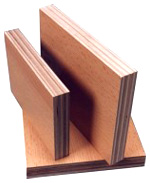
Plywood invented as a modern product traces back to the ancient idea of gluing thin layers of wood together, refined into the panel of cross-laminated veneers the world builds with today. The plywood invented in the twentieth century grew from nineteenth-century experiments in veneer and glue, and the story runs from Egyptian coffin panels to the mass-produced sheets of the timber industry. This guide explains who invented plywood, when and how the modern panel appeared, and how the material became the everyday sheet used in construction and furniture.
The question of who invented plywood has a layered answer, because the technique of gluing veneers is ancient while the strong, weatherproof panel arrived with modern adhesives and machines. Understanding that history shows why plywood behaves the way it does.
The idea of laminating thin wood layers predates the modern sheet by thousands of years, and early makers used the technique for strength and decoration. These early efforts set the pattern the industrial panel would follow.
Ancient Egyptian craftsmen glued and clamped thin wood layers to make furniture and coffins, some three thousand years old, showing the lamination principle long before machine veneer. The ancient glue came from animal sources and took days to press. The technique proved that crossed layers add strength.
Renaissance cabinetmakers layered decorative veneers over solid wood for fine furniture, developing the saw and glue skills the plywood industry later scaled. The craft proved the beauty of a thin, controlled surface. The veneer trade fed the later panel factories.
During the nineteenth century makers patented ways to build a single strong sheet from thin layers, and the first plywood patents for furniture panels appeared in the mid to late 1800s. These patents pushed the idea from furniture to a sheet product. The industrial age turned the craft into a manufactured panel.
| Era | Development | What it added |
|---|---|---|
| Ancient Egypt | Glued layers of wood | Strength from lamination |
| Renaissance | Decorative veneer work | Fine surface skill |
| 1800s | Early panel patents | Manufactured sheet idea |
| Early 1900s | Modern veneer machines | Fast, thin, even veneer |
The modern panel came together in the early twentieth century when the veneer lathe, the rotary cutter, and stronger waterproof glues met in a factory. Each invention solved one piece of the puzzle.
The veneer lathe turned a whole log against a long blade to peel a continuous, even sheet of veneer, replacing the slow sawing of layers. The lathe made thin veneer fast and cheap. The machine is the foundation of every plywood mill today.
Makers glued the peeled veneer in layers with the grain running perpendicular between plies, so the sheet gained strength in both directions and stopped splitting. The cross-grain layup is the core idea of plywood. The alternating grain is what makes the panel stable.
Synthetic resin glues, developed in the early twentieth century, bonded the layers against moisture and heat, turning thin veneer into a weather-resistant panel. The new glue opened outdoor and marine uses. The adhesive is the reason modern plywood survives water.
Factories combined the lathe, the press, and the glue into a continuous line that produced the standard 4×8 foot sheet, and plywood became a bulk building material by the 1920s and 1930s. The standard sheet fit the growing framing industry. The panel moved from furniture into the structure of buildings.
Several names and firms pushed plywood from a patent into an industry, and the record credits both individual inventors and the companies that built the mills. The story is shared rather than owned by one person.
Inventors in the United States and Europe patented glued layered panels through the 1800s, and these early names gave the product its first commercial form. Their patents covered furniture-grade panels more than structural sheets. The early work set the legal and technical stage.
In the early 1900s American firms refined the rotary lathe and the waterproof glue and began large-scale production, and the U.S. industry led the world into the 1930s. The pioneers combined the inventions into a factory system. The mills standardized the sheet the industry still uses.
Standard-setting bodies and trade groups later defined the grades, the glue classes, and the sheet sizes, and the material spread worldwide after the Second World War. The standards let any buyer trust any panel. The industry turned the invention into a global product.
Plywood spread because it solved the problems of its time: fast coverage, a strong thin sheet, and a panel that suited the new light-frame building method. The material grew with the building trade.
As light timber framing replaced heavy construction, builders needed a fast, strong sheet to sheath walls, floors, and roofs, and plywood fit the new frame exactly. The sheet tied the frame together in one layer. The building method and the panel grew together.
The Second World War pushed plywood into boats, aircraft, crates, and barracks, and the wartime demand drove new mills and new glues. The military need proved the panel under hard conditions. The war years spread the factories worldwide.
After the war plywood sheathed the housing boom and faced the new mass-produced furniture, and the panel became an everyday product on every site and in every home. The postwar market made it a household material. The sheet entered daily life.
The panel kept changing after the first waterproof sheet, and the improvements answered new needs for fire, moisture, and finish. The modern plywood shelf holds more options than the original factory ever imagined.
Newer resins raised the moisture and weather resistance, and the grade system sorted panels for interior, exterior, and marine exposure. The glue classes let the buyer match the panel to the use. The adhesive progress widened the applications.
Fire-retardant, moisture-resistant, and overlay-faced plywood, plus competing sheets like OSB and MDF, joined the market as the technology advanced. Each specialty captured a new use. The plywood family grew with the demand.
Today’s mills use computers, lathes, and presses to peel, glue, and press sheets at high speed, with tight thickness control and minimal waste byproducts that feed other panels. The modern line is precise and efficient. The technology keeps the panel affordable and consistent.
Knowing how plywood was invented helps a buyer read the grade stamp and the glue class, because the names and the ratings all come from that history. The story explains the sheet in hand.
The face, back, and exposure ratings on a panel stamp trace back to the industry standards that grew from the early mills. The stamp tells the buyer the panel’s intent. The history is printed on every sheet.
The interior, exterior, and marine glue labels come from the adhesive inventions that made the panel survive water. The class predicts the exposure the panel handles. The buyer matches the class to the job.
With the history in mind, a buyer picks interior grades for dry rooms, exterior for weather, and specialty sheets for fire or finish, all descendants of the original invention. The choice follows the use. The modern buyer stands on a hundred years of development.
Buyers ask the same questions about the invention of plywood, and these answers cover the ones that come up most often.
No single person invented plywood. Ancient makers glued wood layers, the technique was patented through the 1800s, and early twentieth-century firms combined the veneer lathe, cross-grain gluing, and waterproof glue into the modern panel.
The laminated wood idea is ancient, the first panel patents came in the 1800s, and the modern waterproof plywood appeared in the early 1900s, spreading widely by the 1920s and after the Second World War.
The modern waterproof panel grew largely in the United States and Europe together, with early patents on both continents, so the invention belongs to the international timber industry rather than one country.
The rotary veneer lathe peeled an even, continuous sheet of veneer from a log in seconds, replacing slow sawing, and made thin veneer cheap enough for mass production. It is the foundation of every plywood mill.
Glueing each veneer layer with the grain perpendicular to the next gives the panel strength in both directions and stops it splitting or warping. The cross-grain layup is the defining idea of plywood.
The plywood invented as a modern product brought together ancient lamination, the nineteenth-century patents, and the early twentieth-century veneer lathe, cross-grain gluing, and waterproof glue. The result is the standard sheet the building and furniture trades still rely on. Knowing that history helps a buyer read the grade and pick the panel. For sheets built to the modern standard, a manufacturer such as HYY supplies Commercial Plywood and Film Faced Plywood with consistent layers and dependable glue lines.