Our Location
5th Floor, Huake Center, Lanshan District, Linyi City, Shandong Province, China

5th Floor, Huake Center, Lanshan District, Linyi City, Shandong Province, China

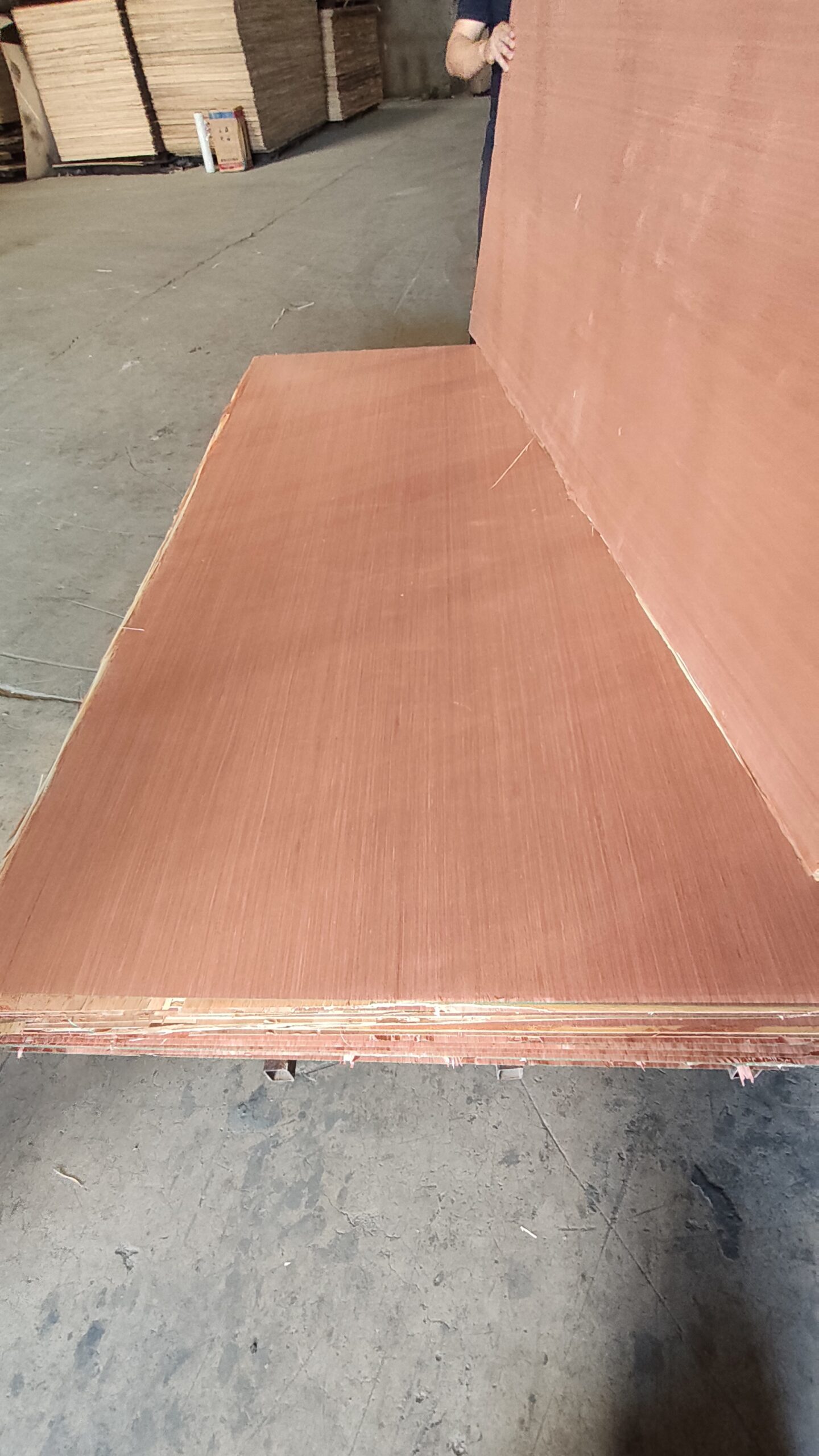
How does plywood made is one of the most common search questions in the timber trade, and the answer runs from the plantation log through the peeling lathe to the finished panel on a pallet. Plywood is made by peeling a softwood or hardwood log into thin veneers, drying and grading the veneers, gluing them in cross-laminated layers, and pressing the stack under heat into a flat, rigid panel. This guide walks the manufacturing line end to end so buyers can read a mill certificate with confidence and know which process steps decide panel quality.
Every step inside the mill changes the final panel, and the process is what sets plywood apart from solid boards. The cross-laminated build gives the sheet its flatness, its balanced strength, and its ability to hold a screw near the edge, all of which trace back to how the mill handles the veneers before the press.
The manufacturing process starts at the log yard, where species, diameter, and condition decide what the line can produce. The log is cut to length, debarked, and conditioned in steam or hot water so the fibers soften enough to peel without tearing.
Heat and moisture make the log pliable so the veneer comes off as a continuous ribbon instead of cracking. Steam time depends on species and log diameter, and a poorly conditioned log produces torn or cracked veneer that never grades high. Mill quality starts at this conditioning stage, long before any glue touches the wood.
A sharp blade peels the rotating log into a thin ribbon of veneer, much like unwinding a roll. The blade angle and the log’s rotation speed control veneer thickness, typically from below 1 mm to over 3 mm. A clean, even ribbon signals a well-set lathe and a mill with consistent process control.
| Veneer thickness | Typical use in the panel |
|---|---|
| Below 1 mm | Thin face and back veneers |
| 1-2 mm | Standard plywood laminae |
| 2-3 mm plus | Core layers, heavy-duty cores |
The ribbon is clipped into sheets, dried to a low moisture content so the glue bonds correctly, and sorted by face quality. The visible defects decide the grade letters that later appear on the certificate: clean faces grade A and B, while knots and patches push a face down to C in the commercial classes.
Layup is where plywood earns its name and its flatness. The operator stacks veneers with adhesive between them, and each layer runs with its grain across the grain of the layers above and below. That crossing balances the natural expansion and shrinkage of wood and gives the panel a rigid, stable structure.
A plywood panel uses an odd number of layers so the build stays balanced around the center: for every veneer pulled one way, another pulls back. This balance keeps the finished panel flat when humidity changes. An unbalanced layup is the fastest route to a cupped panel that fails a flatness check.
The glue line decides the panel’s service life. Interior adhesives suit dry rooms, exterior adhesives bond through moisture and weathering, and structural adhesives meet load-bearing codes. The certificate states the glue class, and that single line often decides whether a panel fits cabinetry or formwork.
The center can be solid veneers, a laminated core, or a built-up composite depending on the product line. A solid veneer core gives clean edges for furniture, while a hidden spliced core reduces cost on decorative panels. The buyer reads the core type from the spec to match the edge and screw behavior expected on site.
Press platens settle and drift with use, so mills calibrate platen pressure and temperature on a schedule to hold the panel thickness and glue cure within spec. The standard publishes tolerances for flatness, thickness, and squareness, and the line rejects out-of-tolerance panels before finishing. This calibration duty is what keeps a production line delivering the same grade run after run.
The assembled stack goes into a hot press that squeezes the layers together and cures the adhesive into a single rigid mass. Press temperature, pressure, and time are set for the glue system, and any deviation shows up later as delamination around edges or blisters inside the face.
Heat cures the resin while pressure pushes the veneers into intimate contact so the bond is continuous. A correctly pressed panel leaves the press flat, tight-edged, and free of the blisters and starved joints that signal process drift. This stage is also where the panel takes its final thickness under compression.
Under-cured glue delaminates in damp service; over-pressure starves the joint and leaves an open, brittle glue line. Engineers match the press setting and the adhesive system at design stage, and a reliable mill documents the settings. Buyers see the result as a panel that stays bonded through cutting, routing, and moisture cycles.
Out of the press, the panel gets trimmed square to the nominal size, then sanded to the face grade on the order. The raw edges tell a careful buyer about the core quality, because open voids at the edge mean an open joint inside the panel.
A dense, void-free edge indicates consistent veneer and good pressing, while honeycomb edges show core gaps that will show up at routers and fittings. Buyers inspecting a sample often run a finger along the edge before trusting the certificate. The edge is the one place a layup flaw cannot hide.
Sandpapers step down through grits until the face reaches the grade ordered, from smooth-ready-to-paint to a fill-and-prime surface. Overlaid and film-faced products then take their extra layer after sanding. The face finish and the edge quality together complete the grade story on the certificate.
After finishing, panels pass inspection against the standard, and certified panels carry a stamp that ties the batch to a test report. The mill certificate names the species, grade, glue bond, thickness, and standard, and that is the document a buyer checks against the delivered goods.
Quality control samples panels for bond strength, moisture content, flatness, and thickness against the standard’s limits. Batch numbers trace a defective run back if a panel fails in service. The batch mark on every sheet is the link between the pallet and the certificate.
Buyers compare the stamp on delivered panels to the certificate, measure thickness and squareness on a sample, and look for edge voids and face defects. Midnow problems flagged at delivery trace back to the batch, and the buyer returns them under the claim window. The receiving check is where the mill’s paperwork becomes a buyer’s protection.
The manufacturing steps are interconnected, so a strong press cycle depends on an even veneer moisture content, and that depends on the drying pass before it. A mill that tracks each stage records the panel’s whole history in its batch number. Buyers and graders reward that consistency because it shows up as flat, tight-edged sheets that machine clean.
Buyers ask the same manufacturing questions, and these answers cover the ones that come up most often.
Plywood is made of thin wood veneers peeled from logs, glued together in cross-laminated layers, and pressed into a flat panel. The veneers are usually poplar, birch, pine, or eucalyptus depending on the grade and market.
Crossing the grain each layer keeps the panel flat and stable, because expansion in one layer balances against contraction in the next. That balance is what separates plywood from solid boards.
The operator spreads adhesive on each veneer before the stack goes into the press, and heat cures it under pressure into a continuous bond. The glue class on the certificate sets the moisture and structural service class.
No. Mills differ in veneer quality, peel control, adhesive system, and press discipline, and those differences show up in edge void content, flatness, and delamination resistance. The certificate and batch testing protect the buyer.
A single panel moves through the line in minutes, but the conditioning, drying, layup, pressing, finishing, and testing run adds up to several days from log to a fully certified batch ready to ship.
Plywood is made from peeled veneers, dried and graded, laid up in balanced crossing layers, and heat-pressed into a flat, stable panel that the certificate describes. Buyers who read the certificate and inspect the edge at delivery take panels built to the spec. For certified plywood off a controlled line, a manufacturer such as HYY produces Commercial Plywood and Melamine Plywood with the batch records on every order.